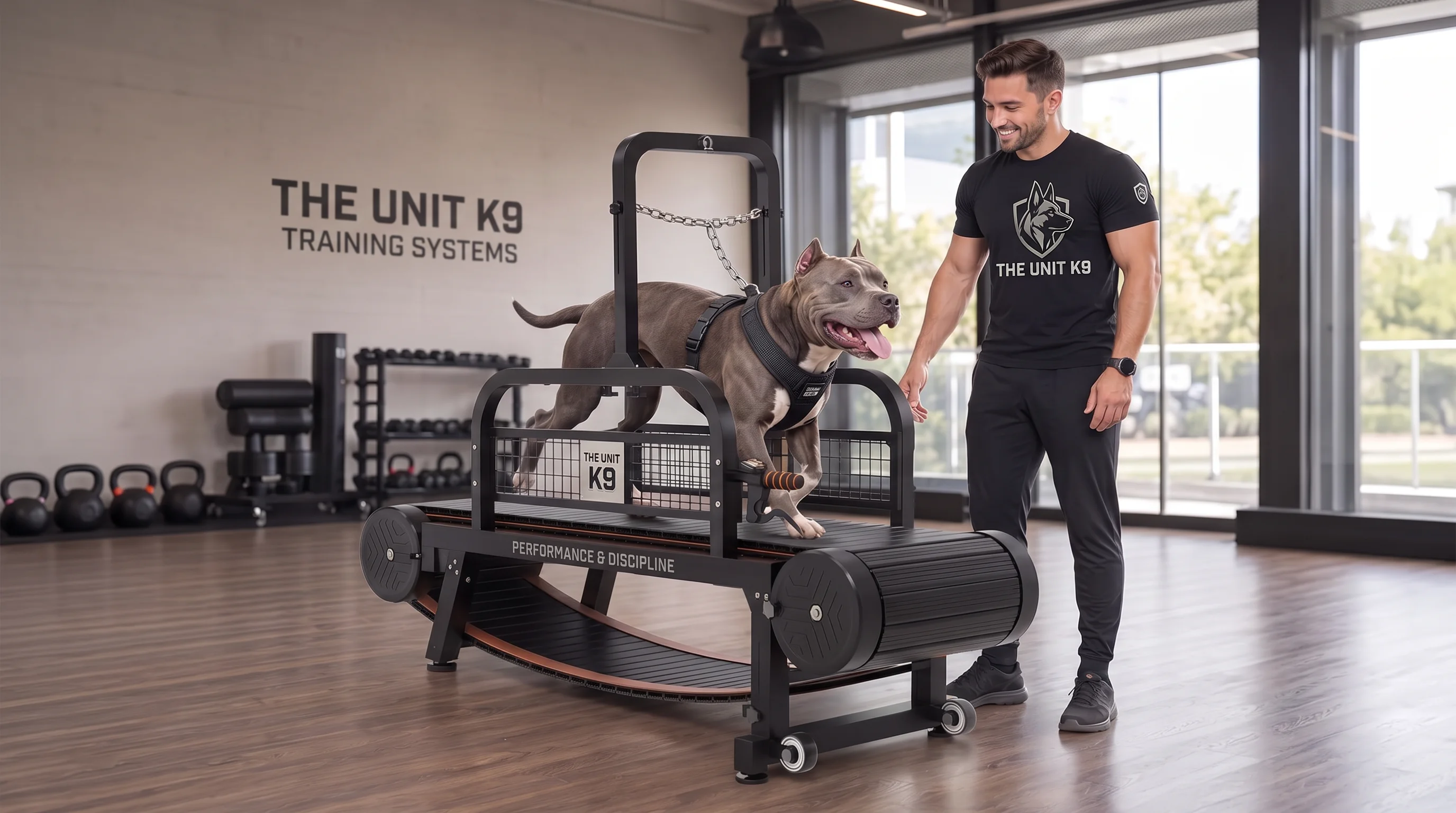
Serious conditioning.
At your door.
A professional canine treadmill, brought to your driveway in a climate-controlled van.
No leash, no traffic, no weather.
- 01
We bring the gym
The Unit K9 pulls up right outside your home. No driving across town and no waiting room.
- 02
They set the pace
Your coach guides your dog through a supervised session on our motor-free treadmill, at their own pace.
- 03
They head home satisfied
Back home within minutes, exercised and ready to relax. The equipment is sanitized after every session.
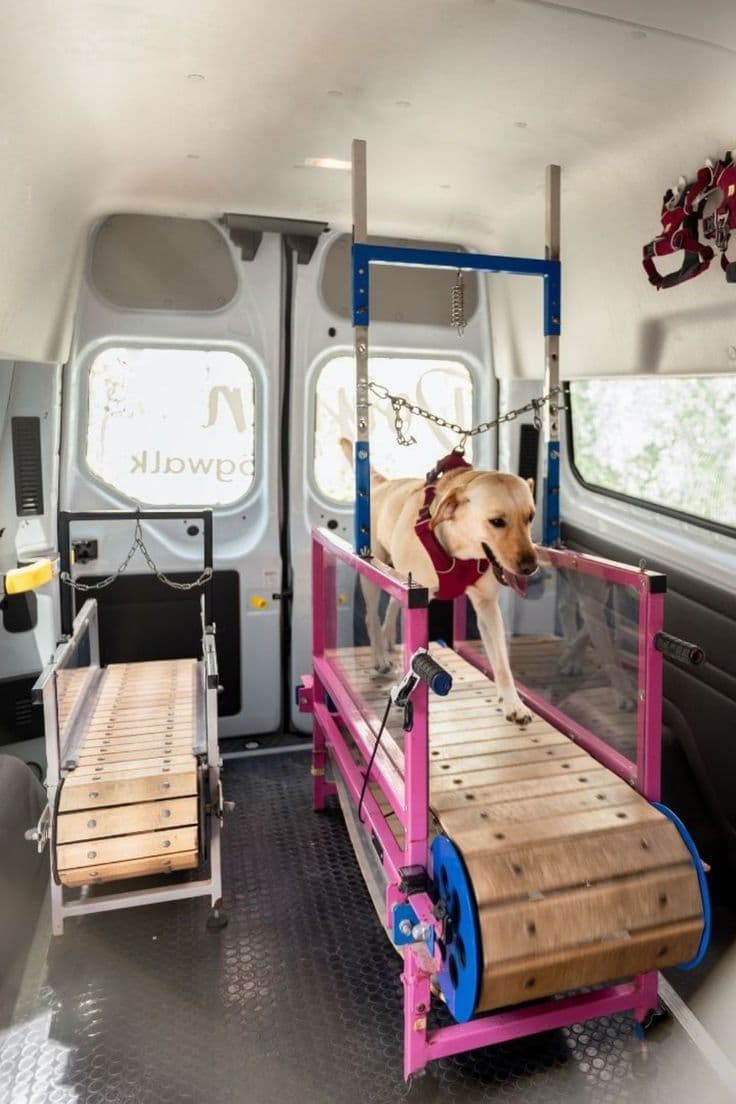 Inside the van
A walk maintains. Conditioning builds.
The belt has no motor, so your dog sets the pace and can never be dragged along. Thirty minutes of that does what distance alone cannot.
- Cardiovascular work at a pace your dog chooses
- Rear-end strength for long-term mobility
- Predictable calorie burn, on a schedule
- Mentally tiring in a way a walk is not
- Climate-controlled, so the routine never breaks
What structured work changes.
Structured, repeatable exercise does things an unstructured walk cannot. Consistency is what changes a dog.
Cardiovascular health
Sustained effort at a pace your dog sets, the kind of work a stop-start walk never delivers.
Joint strength
Driving from the hindquarters builds the rear-end engagement that supports long-term mobility.
Weight management
Predictable calorie burn on a schedule, which is what actually moves a dog's weight.
Mental focus
Thirty minutes of concentrated work tires the mind in a way distance alone does not.
Calmer behavior
Most of what owners call a behavior problem is unspent energy. Spend it properly and the rest gets easier.
Any weather
Climate-controlled means no heat advisories, no ice, no rained-off days.
The difference shows up at home.
“I booked it expecting a novelty and got a genuinely different dog. He used to pace the whole evening. Now he runs on a Tuesday and sleeps like he has earned it.”
My girl is terrified of other dogs, so daycare and group walks were never an option. This is the first exercise she has ever had that does not leave her shaking.
Priya N.Nala, rescue mix Our vet wanted eight pounds off him and told us to walk more. In July, in this heat, that was not happening. The van solved a problem I could not solve.
Dana R.Biscuit, Labrador They text when they set off, they turn up when they say, and they tell you honestly how she did. After five years of dog walkers, that is not a small thing.
Tom H.Poppy, Border Collie I work twelve-hour shifts and the guilt was constant. Thirty minutes on a Thursday has done more for him than the hour I used to force myself through at midnight.
Alicia F.Moose, Rottweiler He is eleven and slowing down. They keep him at a walk, they watch him the whole time, and they stop the second he has had enough. That is exactly what I wanted.
Ray K.Duke, German Shepherd
What every dog needs.
Most dogs begin getting comfortable with the treadmill within their first few minutes. We take introductions slowly, keep the first session comfortable, and encourage you to stay and watch.
- 01
At least 4 months old
Growing joints work shorter, easier sessions.
- 02
Current on vaccinations
Up to date before the first visit, as for any dog care.
- 03
Cleared by your vet
Especially for seniors, recovering or brachycephalic dogs.